
Sports Figure Death File: Jerry Koosman Dies at 83
By Nattapong Sukkasem · Published · Updated .
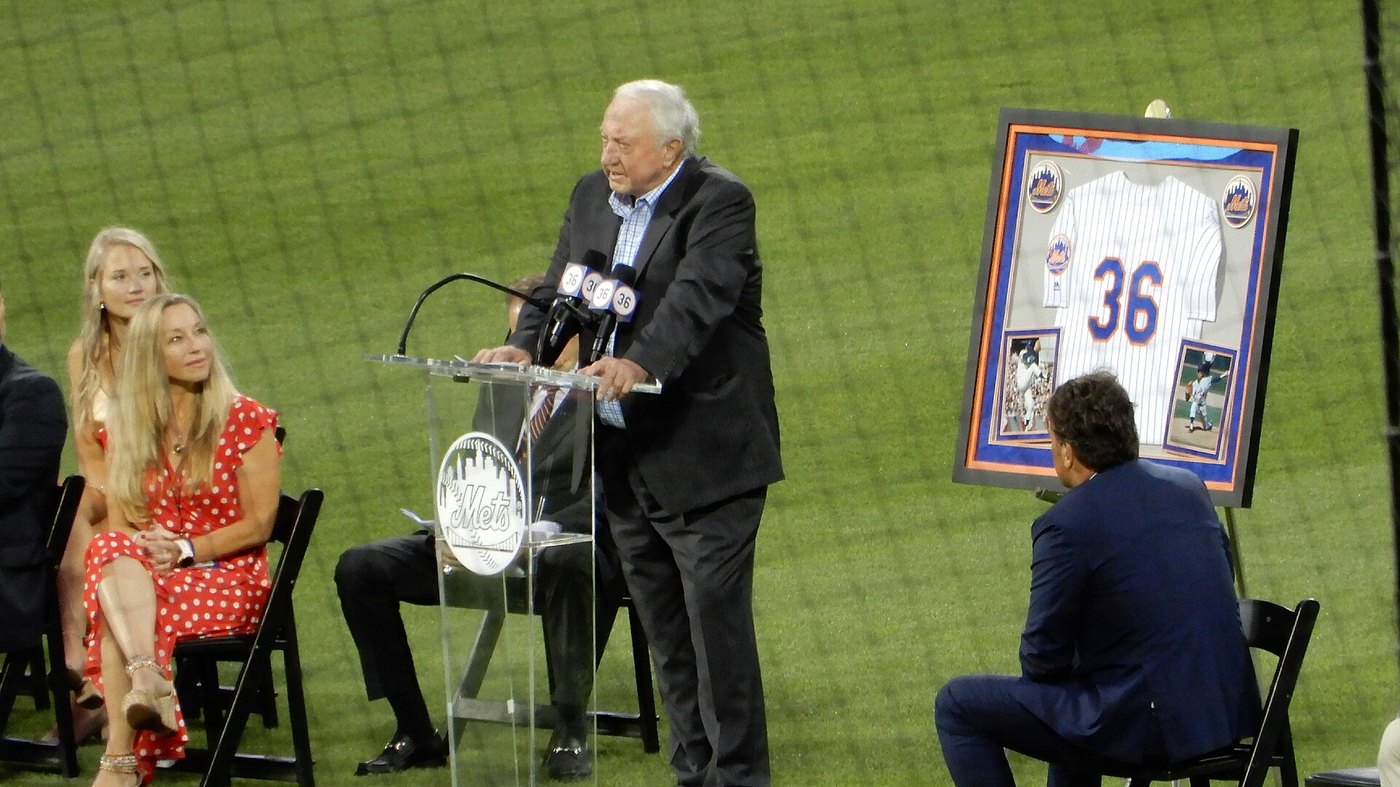
This sports figure death comes with a photograph attached that half of New York can draw from memory. Jerry Koosman — the left arm that threw the last pitch of the 1969 World Series, then vanished under a catcher — died on Sunday 1 November 2026 in Osceola, Wisconsin. He was 83. Mets spokesman Jay Horwitz said he had been ill for about a year and died of multiple illnesses, surrounded by his children. Morty filed this one standing up, which is departmental shorthand for respect.
Eighty-three is a solid number. It is also, Morty notes with the flat voice of a man reading a spreadsheet, the exact age at which Tommy John checked out in August. Two left-handed pitchers, two 83s, one filing cabinet. The office has stopped pretending that is a coincidence and started pretending it is a theme.
The $1,600 arm nobody was looking for
The recruitment story is better than anything a studio would greenlight. Jerome Martin Koosman was born on 23 December 1942 in Appleton, Minnesota, a town that does not appear on most maps and does not especially want to. He was pitching in the U.S. Army at Fort Bragg, North Carolina, when his catcher — John Luchese — wrote home to his father about the kid with the arm.
The father was an usher at Shea Stadium. He mentioned it to Joe McDonald in the Mets front office. The Mets, who at that point were losing 100 games a season as a lifestyle choice, signed Koosman on 27 August 1964 for $1,600.
Sixteen hundred dollars. A World Series was purchased, essentially, on the recommendation of a man who tore tickets for a living.
Let every scouting department in professional sport sit quietly with that. The analytics revolution produced a great many spreadsheets. It has not yet produced an usher.
The rookie year that should have won an award
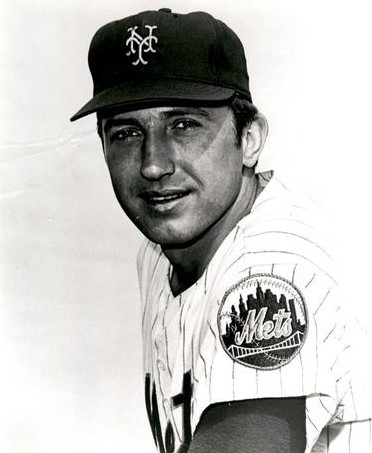
In 1968 Koosman went 19–12 with a 2.08 ERA and seven shutouts, which in a sane universe is a Rookie of the Year trophy and a parade. He finished second to Johnny Bench, because Johnny Bench was also happening at the time. He made the All-Star team and struck out Carl Yastrzemski for the final out of the National League’s 1–0 win at the Astrodome — a fairly loud way of announcing that he enjoyed last outs.
1969, or the year the filing system broke
Some context for anyone under fifty. The New York Mets entered the league in 1962 and lost 100 games in five of their first seven seasons. They had never finished a year above .500. They were not a bad team so much as a civic running joke with a stadium attached.
On 13 August 1969 they sat ten games behind the Chicago Cubs. Then they won 38 of their last 49, took first place on 10 September, finished 100–62, swept the Braves and arrived in a World Series against a Baltimore Orioles club that was supposed to beat them in four.
Koosman was the No. 2 starter behind Tom Seaver, 17–9 with a 2.28 ERA. In Game 2 he went eight and two-thirds innings, gave up a single run, and won it 2–1. In Game 5 he threw a complete-game five-hitter and retired Davey Johnson on a fly ball to Cleon Jones in left field.
That was the final out of the World Series. Koosman jumped into catcher Jerry Grote’s arms and the rest of Queens came over the wall behind him. He told broadcaster Howie Rose that his only thought on the last pitch was: “Don’t drop the ball.” Of the celebration he said years later, in Peter Golenbock’s Amazin’, that they were too choked up to talk.
The shoe polish, because you cannot tell this story without it
Game 5 also produced the greatest piece of improvised equipment fraud in American sport. A pitch skipped toward Cleon Jones; the umpire said no. Manager Gil Hodges produced a ball with a smear of shoe polish on it. Jones got first base, the Mets scored, and the polish — legend has it — arrived via a dugout instruction to Koosman: swipe it against your shoe.
Morty has reviewed the regulations and is pleased to report that there is no statute of limitations on getting away with it.
Beyond 1969: the sports figure death of a 222-game winner
People who only know the 1969 clip assume the rest was a victory lap. It was not. Koosman pitched nineteen seasons and finished 222–209 with a 3.36 ERA, 2,556 strikeouts, 140 complete games and 33 shutouts. He won 20 games twice. In 1976 he went 21–10 and finished second in the Cy Young voting to Randy Jones — the second time this file has used the phrase “finished second” about a man plainly having a lovely year.
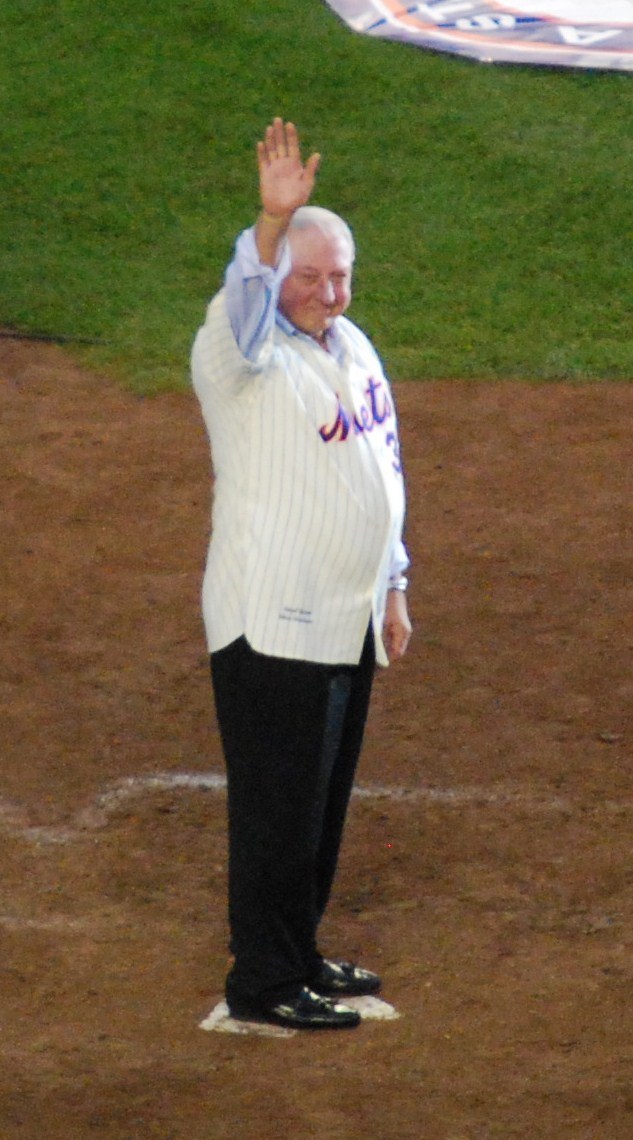
Traded to the Minnesota Twins in December 1978, he promptly won 20 games back home in 1979, because of course he did. Then the Chicago White Sox, the Philadelphia Phillies, and a last appearance in August 1985. Twelve of those years were in Queens: 140–137, 3.09, third on the franchise win list behind a man named Seaver.
The Mets retired No. 36 on 28 August 2021, only the third number retired for a player, after Seaver and Mike Piazza. Asked to explain fifty years of pitching in one sentence, Koosman offered that good pitching gets out good hitting. He was not a man who padded a word count.
The actuarial bit: what the death clock makes of 83
An American boy born in December 1942 was quoted roughly 63 years at the gate. Koosman took 83 years and ten months. Run that through any honest death clock and he beat the table by about twenty years, which on this desk counts as a landslide, and he did it in a profession built on throwing a ball overhand roughly 40,000 times for money.
Pitchers do unusually well in this ledger, and it is not the arm — the arm is a disaster area. It is everything attached to it: lifelong conditioning, an employer who notices when you are unwell, a defined craft, a structured retirement, and the kind of fame that keeps inviting you back to things. Purpose and belonging are not soft factors. They are the load-bearing wall of the whole life expectancy factors page.
He was ill for about a year, and he died with his children in the room. On the paperwork, that is as close to a clean exit as the department issues.

Morty attempted the Grote jump during intake and has been advised by the departmental physician to never do that again.
Morty’s verdict
Most weeks this office processes a celebrity death, an actor death, the occasional actress death or politician death, and a rising tide of influencer death from people whose entire body of work fits on a phone. A sports figure death like this one lands differently, because the evidence is one frozen second that millions of people experienced at once and never quite put down.
Career line: 222 wins, 2,556 strikeouts, 33 shutouts, two 20-win seasons, a robbed rookie year, a Cy Young runner-up finish, the final out of the only World Series the 1960s Mets had any business losing, a retired number, and a $1,600 signing fee that remains the best transaction in the history of professional sport.
He is survived by his sons Michael and Shawn and his daughter Danielle, by the town of Morris, Minnesota, which threw him a parade in 1969 and never fully stopped, and by everyone who has watched that last fly ball settle into Cleon Jones’s glove and felt something go quiet.
Filed under sports figure death. Cross-referenced under “hired on a tip from an usher, left as a monument.”
Desk closed. Don’t drop the ball.
The running ledger of this year’s famous deaths lives in our Dead Celebs guest book, last month’s Mike Ditka sports figure death file is still on the next desk, the most recent entry before this one was the John Anderson celebrity death, the daily intake sits over on Who Died Today, and the full archive is on the Death News desk.
A note on tone: this site is a joke, but these people aren’t. Every date, statistic and biographical detail above is drawn from published reporting by the Associated Press (via NBC New York and MPR News), ABC7 New York and Fox News/OutKick, plus the Mets’ own announcement through Jay Horwitz. He died on 1 November 2026 in Osceola, Wisconsin, aged 83, after about a year of illness; no single cause has been published. The 1976 Cy Young runner-up finish and the 2021 number retirement are reported inconsistently across outlets, and this file follows the majority account. All three photographs are genuine, freely licensed images credited in full beneath each picture — no AI-generated images are used anywhere on this site.
Reporting sources
- NBC New York / Associated Press — “Mets pitcher Jerry Koosman from 1969 World Series team dies at 83”, 2 November 2026. nbcnewyork.com
- MPR News / Associated Press — “Jerry Koosman dies at 83, known for getting final out in the 1969 Miracle Mets’ World Series”, 2 November 2026. mprnews.org
- ABC7 New York — “‘Miracle Mets’ pitcher Jerry Koosman dies at 83, team announces”, 2 November 2026. abc7ny.com
- Fox News / OutKick — “Jerry Koosman, hero of the 1969 ‘Miracle Mets’ World Series championship run, dead at 83”, 1 November 2026. foxnews.com